
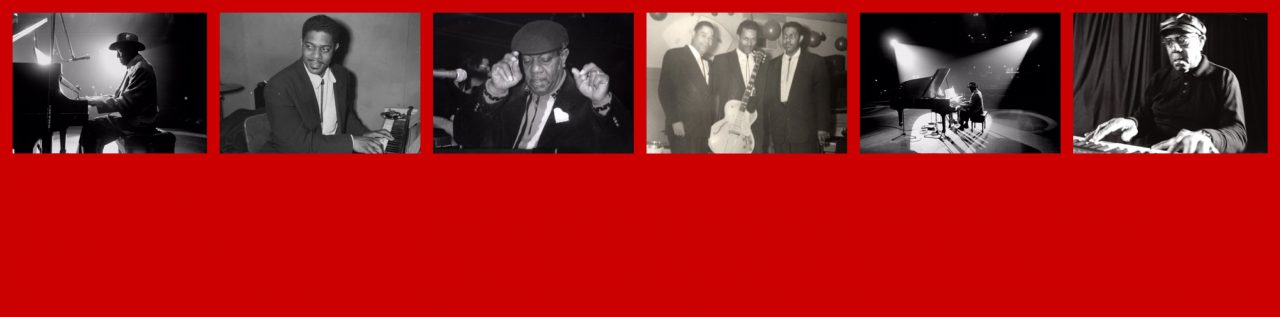
 From one keyboardist to another
It’s less than two hours before Bruce Hornsby’s “Live on the Levee” riverfront performance in St. Louis. He sat down, clipped his microphone on, asked me if I was rolling, and then sang a quick tribute to Johnnie Johnson, one keyboard master saluting another.Hornsby thought enough of Johnnie to take part in a recording project in 2003.
Category: News
A Walk Around Harvard
I feel smarter already.
My east coast road trip continued in Cambridge, Massachusetts where I interviewed multi-faceted rock legend Al Kooper, who performed live and also recorded with Johnnie Johnson. Kooper IS rock and roll history. Regarding Johnnie Johnson, Kooper said, “Since “Hail! Hail! Rock ‘N’ Roll” the big guys all knew who he was. The problem was we didn’t know what had become of him, we didn’t know if he was even alive. But we all knew who he was and talked about him in interviews. I’ll never forget him. I wouldn’t be here talking to you if it wasn’t for him. And I miss him so much.”One thing Kooper and I have in common is documentary projects. Amazingly, Kooper is approaching 50 years in the music business and is working with filmmakers on a documentary about his storied career. There’s a lot of Kooper history to tell. Born in New York, Al Kooper is one of the great keyboardists of 1960’s rock. Kooper also plays guitar, sings and is a songwriter. After forming a doo woo group in the 1950’s, Kooper went on to write a No. 1 song for Gary Lewis and the Playboys (“This Diamond Ring”) in 1964. Subsequently, as a guitarist, Kooper attended Bob Dylan sessions in 1965 but was enlisted by Bob to play keyboard instead on “Like a Rolling Stone”, recording that immortal keyboard track. After touring with Dylan and also playing on “Blonde On Blonde”, Kooper joined the Blues Project, which released several albums, before he formed Blood, Sweat & Tears in 1967. Kooper left after one album, however, and became a studio musician. That’s when, in 1968-69, he met up with the Stones, where he contributed to “Beggars Banquet” and also played the immortal piano, organ and French horn parts on “You Can’t Always Get What You Want”. During this period, he also recorded with Jimi Hendrix, B.B. King, Taj Mahal and the Who. He went on to play with Stephen Stills and Mike Bloomfield and became a producer, working with Simon & Garfunkel and then discovering and producing Lynyrd Skynyrd in the 1970s. But he also continued recording and performing with artists in the 1970s and beyond, notably with Bob Dylan again, Bill Wyman, Alice Cooper, Nils Lofgren, the Nitty Gritty Dirt Band and Tom Petty & the Heartbreakers. Like I said, Al Kooper is rock and roll history and even though he says it doesn’t matter to him, it’s a joke that he’s not in the Rock and Roll Hall of Fame.Yesterday I was in Woodstock, New York to interview Rock and Roll Hall of Fame member John Sebastian. What a cool place Woodstock is, with beautiful streams running through the town, which is best known for the seminal 1969 music festival. Sebastian drove by my motel and I followed him back to his five acre wooded property. Before setting up for the interview we walked his property with his two dogs, chatting about music and family. Sebastian has two sons, one a musician, the other training to rescue mountain climbers.Sebastian told one of the best stories I could ever hope to use in the documentary. In 2000, shortly after Sebastian was inducted into the Rock and Roll Hall of Fame with the rest of the Lovin Spoonful, he shipped his hall of fame trophy to St. Louis to Johnnie Johnson, because he thought it was an injustice that Johnson hadn’t long ago been inducted. My question to Sebastian: the hall of fame is an “all about me” moment. Why was he thinking about sending his hall of fame statuette to Johnnie Johnson?”He’s our architect, so it was odd that he wouldn’t have one (hall of fame statuette). He took it in the best possible spirit. He put it on his mantel and Frances said frequently that he really enjoyed having this thing on his mantel. I was thrilled that my rock and roll hall of fame statuette got to sit on Johnnie Johnson’s mantel for awhile. “John Sebastian has had a multi-faceted career as a singer, songwriter, and musician. As the leader of the folk-rock band the Lovin’ Spoonful, he was responsible for a string of Top Ten hits in 1965-1967 that included the chart-toppers “Daydream” and “Summer in the City,” and he returned to number one in 1976 as a solo artist with “Welcome Back.” He wrote or co-wrote those hits as well as many others, along with songs used on Broadway and in the movies. And as an instrumentalist, primarily playing harmonica, he has accompanied a wide range of artists including Judy Collins, Crosby, Stills & Nash, the Doors, Bob Dylan, the Everly Brothers, Art Garfunkel, Gordon Lightfoot, Laura Nyro, Graham Parker, Dolly Parton, Peter, Paul & Mary, John Prine, and Bonnie Raitt.John was a great host, taking me to lunch in downtown Woodstock. His comments about Johnnie are much appreciated.I watched tape of Monday’s interview with Eric Clapton. He was so ready to talk about Johnnie and how much he enjoyed knowing him and performing with him. Clapton’s first performance with Johnnie was in St. Louis during the “Hail! Hail! Rock ‘N’ Roll concerts. “I couldn’t wait to hear him play. All through the rehearsals there were little glimpses of it. It was another opportunity for me to say, this is where it began. This is what it’s all about. The first things that pulled me through from being a frustrated and confused little kid was hearing things like “Memphis”, “Sweet Little Rock and Roller”, and “Carol”. Those songs would transport me to a kind of fantasy land the minute I heard them. I’d be taken out of whatever was going on in my life. It made me happy. So the great thing about “Hail! Hail! Rock ‘N’ Roll” was to be able to let those guys know, Chuck and Johnnie, that they kind of saved my life. I was there in a hurry because I wanted to pay back what they had given me.”A road trip that began with interviewing Eric Clapton in New York City, ends with John Sebastian in Woodstock and Al Kooper in suburban Boston. I can’t fully express my gratitude to these wonderful musicians who’ve each left their own significant marks on the music industry. Thanks also go to interviewees Jeff Alexander, who produced Johnnie final cd “Johnnie Be Eighty and Still Bad”; Joe Colluci a New York attorney and musician who was inspired by Johnnie; and David Bennett Cohen, former member of Country Joe and the Fish and the host of an instructional dvd showcasing Johnnie’s piano playing. Thanks to all of you. It was one hell of a road trip and the material for “Johnnie Be Good” just keeps getting stronger.The journey continues…… Art HollidayDirector, JOHNNIE BE GOOD
Night before Clapton
Sleep? Who needs Sleep?
I’m in NYC and I can’t sleep. It’s the night before I interview Eric Clapton and I’m too jazzed to go to bed. The day I received word that Eric Clapton would sit down to talk about Johnnie, that was a very good day for “Johnnie Be Good”.Art HollidayDirector, JOHNNIE BE GOOD
Get to Buddy Guy’s Legends “Quick”
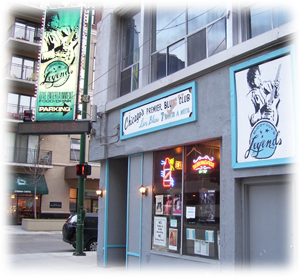 Historic establishment will be moving.
If you are in Chicago before June, RUN, don’t walk to Buddy Guy’s Legends, 754 South Wabash. Why before June? Because the legendary blues club is going to shut down and Buddy told me he’s looking at other locations in Chicago. The walls of Legends are full of memorabilia, signed guitars, photos, and artwork featuring the likes of Muddy Waters, Eric Clapton, John Mayer, Little Milton, Steve Ray Vaughn, Jeff Beck, G.E. Smith, Willie Dixon, and Johnnie Johnson.
Legends Lining Up
Clapton and Guy commit to project.
Within the last five days, two members of the Rock and Roll Hall of Fame, Eric Clapton and Buddy Guy agreed to do on-camera interviews for “Johnnie Be Good”. I’ll interview Guy later this month, and I’ll interview Clapton in mid-April.
Mr. Clapton Comes to St. Louis
 Unexpected visit during Steve Jordan Interview
Today was the day I met Eric Clapton…yeah, it was a REALLY good day. Rewind to the night before: Clapton and his band were en fuego as Dan Patrick used to say on ESPN. They rocked downtown St. Louis so hard the Gateway Arch was movin’ to the beat. I was supposed to interview drummer Steven Jordan in St. Louis, but the band’s travel plans changed, which meant I had to make my own travel plans for Ohio the following day.
Aerosmith Rocks the Blues
Perry ponders Johnnie’s impact
Today, I took another major step in the production of “Johnnie Be Good.” In an earlier blog, I told you about being in Georgia to interview Chuck Leavell of the Rolling Stones and getting the email that Aerosmith’s Joe Perry had agreed to an interview. Tonight, Aerosmith was in St. Louis to perform and Joe Perry spared about 25 minutes between his sound check and the concert.
In Memmorium…
9/11 Anniversary a time to reflect
Being in New York City on the fifth anniversary of 9/11 is a very sobering experience. All morning I listened to the reading the names of the people who died in the Twin Towers. It was a day that changed the world forever.Musician, arranger, and producer Jimmy Vivino was my first New York interview.
Steve Jordan Interview
Grammy Winner on Johnnie Memories
A double dose of good news today. Drummer extraordinaire Steve Jordan has agreed to do an interview for “Johnnie Be Good” and that’s significant for a couple of reasons. Jordan, a Grammy winner, was the drummer in the all star band featured in “Hail! Hail! Rock ‘N’ Roll”, so he got an up close look at how and why the Chuck Berry concert and documentary jump-started Johnnie’s career.
Director to Director
Taylor Hackford shares his insights.
I’ve gone Hollywood…literally. On what I assume is a typically sunny Cali morning, I drove my rental car into the Hollywood Hills to meet and interview movie director Taylor Hackford (“Officer and a Gentleman”, “Delores Claiborne”, “The Devil’s Advocate”).
 jjthemovie